

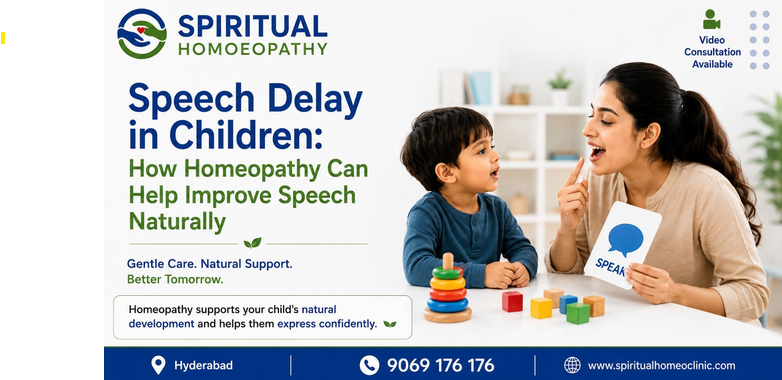

Watching a child take their first steps and utter their first words are among the most celebrated milestones in parenting. However, when those expected early words remain unspoken, concern can naturally begin to build. Seeking a specialized Speech Delay Homeopathy Treatment offers a gentle, holistic, and deeply individualized approach to encouraging natural communication skills. Classical homeopathy views a child’s speech development as part of their complete neurological, emotional, and physical growth. By evaluating the underlying factors that influence developmental progress, constitutional care works to support healthy communication alongside essential developmental therapies.
At Spiritual Homeopathy, a recognized healthcare center in Hyderabad, pediatric wellness is approached with deep empathy and scientific diligence. Spiritual Homeopathy is committed to providing compassionate, patient-centered care, ensuring that every child receives personalized attention and holistic support throughout their developmental journey. Beyond child healthcare, Spiritual Homeopathy provides personalized treatment plans for women’s health, skin and hair concerns, hormonal imbalances, digestive disorders, and chronic lifestyle conditions. Our experienced doctors conduct thorough case evaluations to understand each child’s unique developmental timeline. By focusing on individualized care, detailed case evaluations, and ethical clinical practices, Spiritual Homeopathy has built the trust of families seeking holistic pediatric healthcare, providing a supportive path for families navigating developmental delays.
Understanding Speech Delay in Children
What Is Speech Delay?
A speech delay occurs when a child is not meeting the typical age-appropriate milestones for verbal output. Speech specifically refers to the physical production of sounds and words. It involves the coordinated effort of the vocal cords, tongue, lips, and jaw, controlled by complex neurological signals in the brain.
How Speech Development Varies From Child to Child
Child development is naturally dynamic. Every young child grows at their own unique pace, influenced by genetic factors, home environment, and personal personality traits. Some children focus early physical energy on mastering motor skills like walking and climbing, while others devote focus to verbal imitation. A minor deviation from standard milestone charts is common and often normal.
When Parents Should Start Paying Attention
While variations in timeline are normal, a significant pause in speech progress warrants close observation. If a child shows little interest in vocalizing, struggles to imitate simple sounds, or relies exclusively on gestures to communicate past expected ages, a professional developmental evaluation offers valuable clarity.
Why Early Support Can Make a Difference
The early childhood brain possesses extraordinary neuroplasticity—the ability to form new neural pathways rapidly in response to positive stimuli. Addressing developmental hurdles early provides the sensory and neurological foundation needed to prevent communication struggles from impacting later learning and social confidence.
Early Signs of Speech Delay Every Parent Should Know
Age-Wise Speech Milestones
- 12 Months: Expected to babble with intention, use gestures like waving bye-bye, and say simple words like “mama” or “dada”. Red Flags: Lack of back-and-forth babbling, absence of eye contact, or no response when their name is called.
- 18 Months: Expected to use 6 to 20 simple words, point to objects of interest, and understand basic verbal requests. Red Flags: Preferring gestures entirely over vocalization or failing to imitate simple sounds.
- 24 Months: Expected to combine 2 words together (e.g., “more milk”) and build a vocabulary of 50+ words. Red Flags: Inability to imitate words or actions, or difficulty following simple spoken instructions.
- 36 Months: Expected to use 3- to 4-word sentences with speech that family members understand most of the time. Red Flags: Unclear speech that strangers cannot understand or frequent frustration during daily communication attempts.
Signs That May Indicate Delayed Speech Development
- Lack of eye contact or shared attention during play.
- Inability to point to named objects or body parts by 18 to 24 months.
- Difficulty understanding simple spoken requests or instructions.
- Infrequent attempts to imitate sounds or words spoken by caregivers.
- Frequent frustration or temper tantrums stemming from an inability to express basic daily needs.
Differences Between Speech Delay and Language Delay
It is essential to distinguish between speech and language delays. A child with a speech delay might attempt to communicate ideas using complex gestures and expressions, but struggles to form the vocal sounds clearly. A child with a language delay may produce sounds clearly, but struggles to understand spoken words (receptive) or combine words to form meaningful thoughts (expressive).
When Professional Evaluation Becomes Important
If your child consistently misses key age-specific milestones, exhibits social withdrawal, or shows regression in previously acquired words, scheduling a professional developmental evaluation is the best next step.
Common Causes of Speech Delay in Children
Hearing-Related Challenges
Hearing clarity is essential for natural speech acquisition. Children learn to speak by listening to and processing the sounds around them. Chronic middle ear infections (otitis media) with fluid accumulation can cause temporary hearing muffling, making it difficult for toddlers to distinguish subtle phonetic variations.
Developmental and Neurological Factors
Speech requires fine neurological coordination. Conditions such as oral-motor dyspraxia, cerebral palsy, or subtle developmental delays can impair the brain’s ability to coordinate the muscles of the mouth, tongue, and palate for clear speech production.
Environmental and Social Influences
Children thrive in environments rich in interactive conversation. Factors like excessive screen time, limited face-to-face interaction, or lack of opportunities to engage with peers can reduce a child’s natural motivation to develop verbal communication skills.
Medical Conditions That May Affect Speech Development
Structural variations like ankyloglossia (tongue-tie), cleft palate, global developmental delays, or neurodevelopmental conditions like Autism Spectrum Disorder (ASD) can directly impact how speech and language develop.
Understanding Different Types of Speech and Language Delays
Expressive Speech Delay
Children with expressive speech delay understand spoken language well—they follow instructions and point correctly—but struggle to produce spoken words themselves. Their difficulty lies in converting internal thoughts into spoken language.
Receptive Language Delay
A receptive language delay affects a child’s ability to process and comprehend spoken words. Children may appear not to hear or pay attention because they struggle to decode the meaning of complex sentences or instructions.
Mixed Communication Difficulties
Many children experience a combination of expressive and receptive challenges. They may struggle both to comprehend complex spoken language and to articulate their own thoughts verbally.
Why Accurate Assessment Is Essential
Understanding the exact type of delay is crucial. A thorough assessment helps speech therapists and homeopathic doctors design targeted interventions tailored to the child’s specific developmental needs.
How Speech Delay Homeopathy Treatment Takes an Individualized Approach
Looking Beyond Speech Symptoms
Homeopathy evaluates pediatric development through a holistic lens. Rather than focusing solely on the vocal delay, a practitioner considers the child’s total health picture—including physical growth patterns, digestive health, sleep quality, thermal preferences, and emotional traits.
Key Aspects of a Holistic Evaluation
- Physical Health Assessment: Evaluating digestive health, recurring ear/throat complaints, and sleep quality.
- Neurological & Motor Tracking: Reviewing milestone progression alongside fine and gross motor skills.
- Emotional & Temperamental Profiling: Understanding how the child reacts to stress, social interaction, and new environments.
- Personalized Care Planning: Structuring gentle constitutional care that coordinates smoothly with speech therapy and parent guidance at home.
Understanding the Child’s Overall Development
Children experiencing speech difficulties may also exhibit underlying physical or emotional sensitivity, such as recurring throat irritations, digestive sensitivities, intense separation anxiety, or restless sleep. A detailed homeopathic evaluation explores these subtle connections to support balance across all body systems.
Personalized Homeopathic Care
There is no single, standard formula for speech delay in classical homeopathy. Two children with identical speech delays might receive completely different care plans based on their unique constitutional traits, emotional needs, and health histories.
Supporting Long-Term Development Naturally
By addressing constitutional imbalances, homeopathy aims to support overall vitality, nervous system health, and emotional resilience. This patient-centered approach provides a strong foundation for the child to engage more fully in speech therapy and daily learning activities.
Understanding speech delay in toddlers homeopathy
Why Toddlers May Develop Speech Later Than Expected
Toddlerhood (ages 1 to 3) is a period of rapid cognitive and physical growth. Toddlers may experience temporary speech pauses due to frequent ear congestion, sudden changes in routine, emotional sensitivity, or simply focusing their energy on motor development like running and jumping.
Early Intervention During the Toddler Years
The toddler years offer a vital window for early developmental support. Seeking speech delay in toddlers homeopathy during this flexible growth phase allows practitioners to address minor constitutional friction early, helping toddlers build social and communicative confidence.
Supporting Speech Through Holistic Care
When toddlers feel physically comfortable—free from digestive distress, chronic ear fluid, or poor sleep—their natural curiosity and desire to interact bloom. Holistic care focuses on improving overall physical well-being, which directly supports speech readiness.
Importance of Parent Involvement
Parents play a central role in toddler development. Simple home strategies, such as reading picture books aloud, singing nursery rhymes, describing daily routines, and limiting screen time, create a rich language environment that enhances therapeutic progress.
Understanding autism speech delay homeopathy
How Autism May Affect Speech and Communication
Autism Spectrum Disorder (ASD) is a neurodevelopmental condition that affects how an individual perceives the world, processes sensory information, and interacts socially. Speech delays in autistic children often coincide with challenges in social communication, such as difficulty maintaining eye contact, understanding social cues, or using gestures.
Why Every Child Requires an Individual Assessment
Autism manifests uniquely in every individual. Some children may be non-verbal, while others may repeat heard phrases (echolalia) without fully grasping their conversational meaning. An individualized assessment evaluates each child’s specific sensory preferences, emotional sensitivities, and communication strengths.
Homeopathy as Part of a Comprehensive Care Plan
It is important to state clearly that homeopathy is not a cure for autism. However, choosing autism speech delay homeopathy as part of an integrative care plan can support a child’s overall well-being. Treatment plans focus on calming hyper-reactivity, easing digestive sensitivities, improving sleep patterns, and supporting emotional stability.
The Importance of Speech Therapy and Developmental Support
Homeopathic care should never replace essential developmental interventions like Speech-Language Therapy, Occupational Therapy, or Applied Behavior Analysis (ABA). Instead, it acts as a supportive option alongside these evidence-based therapies, helping children feel calmer, more focused, and better prepared to engage in their skill-building sessions.
What to Expect During delayed speech homeopathic treatment
Detailed Developmental Assessment
Your initial consultation for delayed speech homeopathic treatment involves an unhurried, detailed conversation. The doctor observes how your child plays, interacts, communicates, and responds to new surroundings in a warm, welcoming environment.
Understanding Pregnancy, Birth, and Medical History
The practitioner will review your child’s complete medical background, including maternal health during pregnancy, delivery events, early feeding patterns, vaccination history, past illnesses, and family health trends.
Key Pillars of Clinical Case Analysis
- Early History: Pregnancy events, delivery history, early feeding patterns, and exact milestone dates to identify early stress points.
- Physical Health: Digestion, history of ear/throat concerns, sleep patterns, and appetite to clear physical discomforts.
- Emotional Profile: Temperament, fears, social interactions, and coping mechanisms to match constitutional needs.
- Environment: Screen time exposure, family routines, and speech therapy routines to optimize home support.
Personalized Treatment Planning
Using this comprehensive developmental profile, the homeopathic doctor designs a gentle, customized care plan tailored specifically to your child’s unique needs.
Monitoring Development Over Time
Progress in pediatric developmental care is evaluated gradually. Follow-up appointments allow your doctor to observe improvements in eye contact, social interest, emotional stability, physical health, and verbal expression, fine-tuning the care plan as your child develops.
Factors That Support Better Speech Development Alongside Treatment
The Role of Speech Therapy
Speech-Language Pathologists (SLPs) provide targeted exercises to strengthen oral-motor muscles, improve articulation, and teach practical communication strategies. Speech therapy remains a core component of supporting children with speech delays.
Parent-Child Communication Activities
- Narrate Daily Life: Talk through everyday activities as they happen (e.g., “Now we are putting on your red shoes”).
- Pause and Wait: Give your child extra time (10–15 seconds) to process what you said and attempt a response without interrupting.
- Read Together Daily: Point out colorful illustrations, name objects, and encourage your child to imitate simple sounds.
- Sing Interactive Songs: Use simple rhymes with hand gestures (like “Itsy Bitsy Spider”) to connect language with movement.
Nutrition, Sleep, and Daily Routine
Providing balanced, nutrient-dense meals free from excessive sugars and artificial additives supports steady energy and concentration. Establishing consistent sleep schedules ensures the brain gets the restorative rest required for cognitive processing and neurodevelopment.
Creating a Positive Learning Environment
Avoid pressuring or overly correcting your child when they struggle to pronounce words. Instead, praise their efforts to communicate, repeat the word back correctly with a gentle tone, and maintain a warm, low-stress environment at home.
How child speech development homeopathy Fits Into a Holistic Care Plan
Individualized Care Based on Developmental Needs
Incorporating child speech development homeopathy into your child’s healthcare routine ensures that their care remains tailored to their changing needs as they grow.
Supporting Emotional and Behavioral Well-Being
Communication struggles often lead to frustration, temper outbursts, or social anxiety in young children. Homeopathic care emphasizes balancing emotional stability, helping children feel calmer and more confident in social settings.
Coordinating With Other Healthcare Professionals
Optimal outcomes are achieved when healthcare providers work together. Homeopathic doctors encourage open communication with pediatricians, speech therapists, occupational therapists, and school educators to support a unified care strategy.
Setting Realistic Expectations for Progress
Natural developmental support requires patience, consistency, and time. Progress is measured not only by new words, but also by improved eye contact, better social interaction, enhanced attention span, and greater emotional calm.
When Should You Consult a Homeopathic Doctor for homeopathy for speech problems?
Delayed Milestones That Need Attention
If your toddler has reached 18 to 24 months without using simple words, or if a 3-year-old struggles to combine two words together, seeking a holistic developmental evaluation is recommended.
Lack of Progress Despite Home Activities
If you have increased face-to-face interaction, read daily, and reduced screen exposure without seeing improvements in your child’s communication confidence, professional guidance can offer new insights.
Concerns About Communication or Social Interaction
If your child appears hesitant to engage with peers, shows little interest in shared play, or experiences frequent frustration due to communication barriers, consulting a specialist skilled in homeopathy for speech problems provides comprehensive support.
Why Early Consultation Is Important
Addressing developmental friction early helps ensure your child receives timely care during their most adaptable years of brain development, building a strong foundation for future learning and social confidence.
Frequently Asked Questions
Can homeopathy help children with speech delay?
Yes. Homeopathy focuses on supporting overall constitutional health, neurological balance, and emotional resilience, providing a supportive foundation alongside developmental therapies like speech therapy.
Is homeopathy suitable for toddlers with delayed speech?
Yes. Homeopathic care plans utilize gentle, diluted natural ingredients tailored to a child’s unique constitution, making them suitable and gentle for toddlers.
Can speech therapy and homeopathy be used together?
Absolutely. In fact, an integrative approach is recommended. Speech therapy focuses on direct skill-building and oral-motor mechanics, while homeopathy supports internal balance, attention span, and emotional well-being.
Does every speech delay indicate autism?
No. Speech delays can stem from various factors, including temporary hearing fluid, oral-motor delays, environmental factors, or simple developmental variance. A professional evaluation provides an accurate diagnosis.
How long does treatment usually take?
Developmental progress varies for every child. Noticeable improvements in overall engagement, physical health, and communication interest often begin within a few months of consistent, holistic support.
Conclusion
Supporting Your Child’s Speech Journey With Early Care
Navigating a speech delay can feel challenging for parents, but early, thoughtful support opens up wonderful possibilities for growth. Exploring Speech Delay Homeopathy Treatment as part of a comprehensive care strategy offers a gentle, natural way to support your child’s complete developmental journey.
Why Timely Evaluation and Consistent Support Matter
Investing time in early evaluations, integrative therapies, and a supportive home environment gives your child the best opportunity to build strong communication skills, emotional confidence, and lasting well-being.
If you are concerned about your child’s speech development or overall milestone progress, consider scheduling a confidential consultation with Spiritual Homeopathy. Our experienced medical team provides compassionate, individualized care designed to support your child’s developmental journey naturally.

