

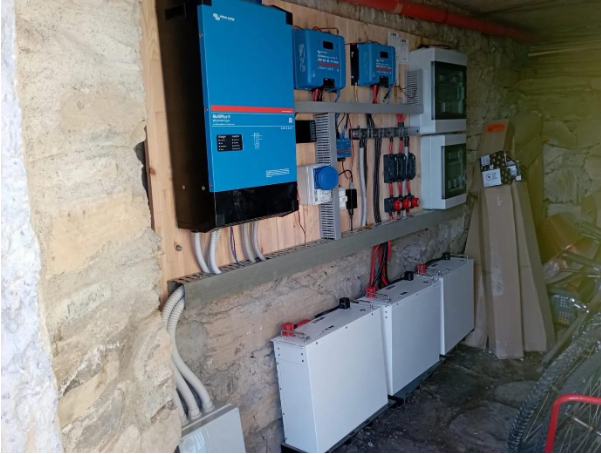

Energy storage is no longer just about capacity. It’s about durability, efficiency, safety, and long-term financial return.
For decades, chemical batteries dominated hybrid and off-grid energy systems. But today, advanced supercapacitor technology is redefining what high-performance energy storage looks like. With over 20,000 life cycles, 100% Depth of Discharge (DOD), ultra-fast charging, and zero overheating risk, supercapacitor-based systems are rapidly replacing conventional battery technologies in demanding hybrid applications.
This shift isn’t a trend, it’s a performance-driven evolution.
The Core Difference: Electrostatic vs. Chemical Energy Storage
Traditional batteries store energy chemically. That process introduces:
- Heat generation
- Degradation over time
- Limited cycle life
- Reduced usable capacity
- Performance decline with deeper discharge
Supercapacitors, by contrast, store energy electrostatically.
This means:
- No chemical breakdown during charging
- Minimal thermal stress
- Extremely high charge/discharge speed
- Stable long-term performance
In hybrid systems where power fluctuations and peak loads are common, this difference becomes critical.
20,000 Cycles vs. 6,000 Cycles: Why Lifecycle Matters
Cycle life is one of the most overlooked cost drivers in energy storage.
Typical lithium batteries offer around 4,000-6,000 cycles before significant degradation. In high-demand systems, that can mean replacement in 5-7 years.
Supercapacitor-based storage exceeding 20,000 cycles fundamentally changes the math.
Longer lifespan means:
- Fewer replacements
- Lower lifetime capital expenditure
- Reduced downtime
- Stable long-term output
When calculated over a 10-15 year operational period, the cost per usable kilowatt-hour drops significantly compared to conventional battery systems.
That’s why many system designers are now recommending a Hybrid SuperCap battery for sale over traditional battery technology for performance-critical installations.
100% Depth of Discharge Without Performance Loss
Conventional batteries typically operate safely at 80–90% DOD. Pushing beyond that accelerates degradation.
Supercapacitor storage allows 100% DOD without structural damage.
This provides two powerful financial advantages:
- Every stored kilowatt-hour is usable.
- No accelerated wear from deep discharge cycles.
More usable capacity per cycle means higher system efficiency and faster ROI.
Heat Generation and Safety: A Major Industry Shift
Thermal risk is one of the biggest concerns in energy storage, especially in residential and commercial installations.
Traditional batteries can:
- Warm up significantly under high current
- Require cooling systems
- Present fire risk under stress
Supercapacitor-based storage eliminates these concerns by generating virtually no heat during operation.
For installers, EPC contractors, and facility owners, this translates into:
- Safer installations
- Lower insurance risk
- Reduced maintenance requirements
- Greater peace of mind
Safety is no longer an optional feature. It’s a purchasing priority.
Faster Charge & Discharge: Built for Real-World Hybrid Systems
Hybrid systems often experience:
- Sudden load spikes
- Variable renewable generation
- Generator-assisted boosts
- Industrial surge demand
Supercapacitors excel in high-current environments, delivering rapid charge and discharge rates without degradation.
In systems integrated with hybrid inverters and intelligent power management, this responsiveness ensures:
- Stable voltage delivery
- Improved power quality
- Reduced generator runtime
- Optimized renewable utilization
This performance advantage is particularly valuable in factories, off-grid facilities, and remote infrastructure projects.
Real ROI: Why Supercapacitor Systems Outperform Over Time
When evaluating energy storage, buyers often focus on upfront cost. However, long-term value is determined by:
- Cycle life
- Replacement frequency
- Efficiency losses
- Maintenance cost
- Downtime impact
- Fuel savings in hybrid systems
Supercapacitor systems deliver:
- 97%+ round-trip efficiency
- Low self-discharge
- Maintenance-free operation
- Extended system lifespan
Real-world data shows ROI periods under four years in properly engineered hybrid systems — especially where generator fuel reduction and peak load management are significant factors.
For commercial buyers researching where to buy Hybrid SuperCap battery online, the critical question isn’t price per unit – it’s cost per lifetime kilowatt-hour delivered.
Why Installers and Engineers Are Making the Switch
Professional energy designers are increasingly selecting supercapacitor storage because it:
- Integrates seamlessly with hybrid inverters
- Handles peak industrial loads
- Scales up to high-capacity stacks
- Reduces generator dependency
- Performs reliably in harsh environments
The shift isn’t driven by marketing, it’s driven by measurable performance improvements in demanding applications.
Is Supercapacitor Storage Right for Your Project?
You may benefit from supercapacitor-based storage if:
- You operate in off-grid or unstable grid regions
- Your facility experiences frequent peak loads
- You rely heavily on diesel generators
- You want long-term cost predictability
- You prioritize safety and low maintenance
Hybrid systems are no longer just about combining energy sources. They are about optimizing how those sources are managed and stored.
Take the Next Step Toward High-Performance Energy Storage
If you’re evaluating advanced hybrid storage solutions, the next step should be data-driven, not assumption-based.
👉 Request a Technical Performance Consultation
Summary
Energy storage technology is evolving rapidly. Systems that once seemed advanced are now being outperformed by smarter, safer, longer-lasting alternatives.
Supercapacitor technology isn’t replacing conventional batteries because it’s new. It’s replacing them because it performs better – longer, safer, and more efficiently.
For buyers who think beyond upfront price and focus on lifecycle value, the decision becomes clear.

